Best for Sleep Tracking
Best for Training Load
By The Recovery Edit research team
This comparison is research-based. We reviewed published specifications from both companies, the independent validation literature comparing consumer wearables against polysomnography, and patterns across verified owner reviews. We did not run our own accuracy testing, and any source claiming to have validated sleep staging without a sleep lab should be treated skeptically.
In This Article
Compare Table
| Oura Ring | WHOOP | |
|---|---|---|
| Form factor | Ring | Band, wrist or upper arm |
| Hardware price | None, included with subscription | |
| Subscription | Required | Required, tiered |
| Battery life | 6 to 9 days | 14+ days (Peak/Life tiers with Wireless PowerPack) |
| Sleep staging | Yes | Yes |
| HRV tracking | Yes | Yes |
| Blood oxygen | Yes | Yes, Peak and Life tiers only |
| Strength training tracking | No dedicated feature | Yes |
| Rating | 4.5/5 | 4.3/5 |
| CHECK PRICE | CHECK PRICE |
The Accuracy Question, Answered Honestly
Both devices are good at detecting whether you are asleep. Both are mediocre at detecting which sleep stage you are in. This is not a flaw specific to Oura or WHOOP. It is a limitation of the entire consumer wearable category.
Sleep staging validated against polysomnography is limited because consumer wearables infer stages from heart rate, movement, and temperature. This means that while they can reliably detect sleep versus wake, their accuracy in distinguishing light, deep, and REM sleep is limited. Understanding this helps users set realistic expectations and focus on overall sleep trends rather than precise stage data.
Independent validation studies of consumer sleep trackers consistently find high sensitivity for detecting sleep and lower accuracy for stage classification, with deep sleep and REM frequently misclassified. A 2025 study in SLEEP Advances tested six wearables, including WHOOP 4.0, against polysomnography in 62 participants and found significant differences from the clinical standard for total sleep time, sleep efficiency, and light sleep.
A 2023 multicenter study in JMIR mHealth and uHealth tested 11 consumer sleep trackers, including an Oura Ring, against polysomnography in 75 participants and found that sleep-stage accuracy varied widely across devices. Oura’s own published validation research shows the same pattern from the inside: close to 95 percent accuracy for simple sleep-versus-wake detection, dropping to roughly 57 to 79 percent for full four-stage classification, depending on which sensor data feed the model.
Practically, this means that tracking overall sleep patterns over weeks is more reliable than relying on exact sleep-stage numbers. If your deep sleep shows 47 minutes tonight, focus on whether that number increases or decreases over time. Both devices are effective for trend analysis, but they should not replace clinical sleep studies for detailed staging.
Be skeptical of any comparison that declares a clear winner in accuracy. The honest answer is that they are in the same range, and that range is wider than either company’s marketing implies.
Honest summary:
Generation matters more than marketing lets on. Oura just moved to Ring 5, a real jump in battery life and sensor design, and WHOOP’s 5.0 restructured its pricing into three tiers, with blood oxygen now locked behind the two more expensive ones. Neither company’s core sleep-staging accuracy has meaningfully changed with these updates; that limitation is structural, not something a new generation fixes.
The price and feature math have changed: WHOOP’s cheapest tier now costs less per year than it used to, but it loses a key feature. Read the spec table, not the launch announcement.
Similarities
- Screenless by design. Neither shows the time or notifications. Both are data collectors, not smartwatches. If you want a screen, neither of these is your product.
- Daily readiness score. Both distill overnight data into a single number intended to guide how hard you push that day. The specific algorithms differ, but the concept is identical.
- Subscription required. Both need an ongoing membership so users stay informed and avoid cost surprises.
- Both devices use the same core sensor approach, relying on optical heart rate, movement, and temperature. Since neither employs EEG, their sleep staging limitations are similar, which helps clarify their technological similarities and constraints.
- Passive tracking. Both are designed to be worn continuously with minimal interaction. That is the appeal for people who dislike wearable friction.
- Trend-first value emphasizes that both devices are most effective when used over weeks, helping users feel confident in their long-term insights.
Differences
Form factor influences comfort and wearability, which helps users feel confident that their device will fit seamlessly into daily life.
The ring and band serve different daily needs. The Oura Ring is discreet and comfortable during sleep but may interfere with gripping or lifting. The WHOOP band is visible and may feel warm during sleep but stays out of the way during training. Recognizing these differences helps users select a device that fits their daily activities and comfort preferences, ensuring consistent wear and reliable data collection.
Training and strain focus
WHOOP is built around the balance between exertion and recovery. Its strain metric is the organizing concept, and the product is designed for people optimizing training. Oura’s center of gravity is sleep and readiness, with activity tracking present but secondary. If your primary question is how hard to train today, WHOOP is aimed at you. If it is how well you slept, Oura is.
Pricing model
Oura has historically charged for hardware plus a monthly membership. WHOOP has used a subscription-led model, and its structure changed with the 5.0 generation into three tiers. Confirm both before purchase, because the total cost across several years differs substantially from the sticker in both cases.
Battery and charging behavior
Battery life and charging patterns vary, which affects data continuity. A device charging is a device not measuring. WHOOP’s battery pack approach allows charging while worn, which is a real practical difference for continuous data.
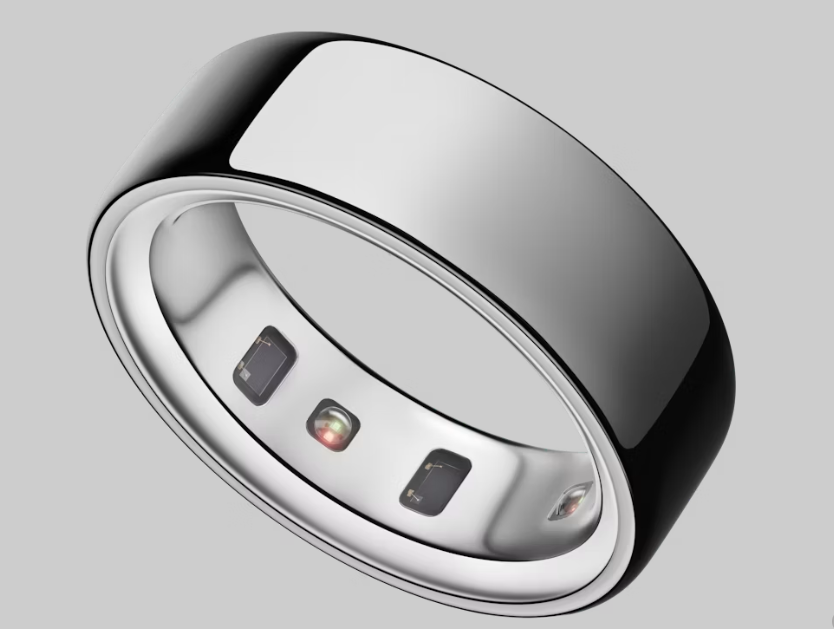
OURA RING: Best for Sleep Tracking
Oura’s product centers on sleep and recovery. The ring form factor is its defining advantage for this use case, because a ring is easy to sleep in and most people forget they are wearing it. Data continuity is high when the device is comfortable enough to wear every night, and that is the quiet reason Oura performs well for its intended purpose.
It suits the buyer whose primary questions are sleep quality, circadian consistency, and readiness rather than training load. It also suits anyone who finds wrist wearables uncomfortable overnight.
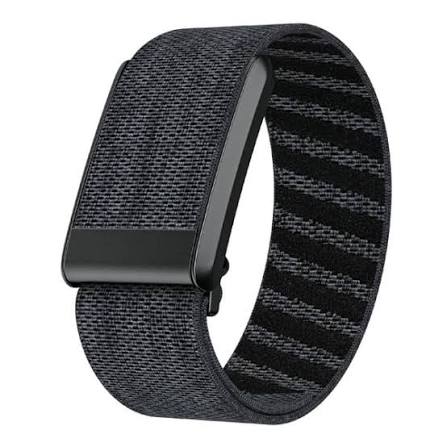
WHOOP: Best for Training Load
WHOOP is built for the exertion-and-recovery loop. Its strain metric asks how much you have taxed yourself and its recovery score asks whether you have absorbed it. Sleep tracking exists in service of that loop rather than as the endpoint.
This is the pick if you train seriously and want a device that connects sleep quality to training decisions. The band also stays out of the way during lifting, which the ring does not.
How We Decided
We compared published specifications from both companies side by side. We reviewed the independent validation literature on consumer sleep wearables measured against polysomnography, prioritizing studies with larger sample sizes and sound methodology, rather than those that happened to favor a particular device. We analyzed patterns across verified owner reviews, prioritizing recurring themes such as ring fit changes and band comfort overnight above isolated complaints. We did not conduct our own accuracy testing, which would require a sleep lab.
Verdict
This is a use case decision, not an accuracy decision. The difference in accuracy between these two is smaller than the marketing on both sides suggests, and both share the same fundamental staging limitation.
If your primary interest is sleep, Oura is the pick. It’s the most comfortable option for overnight wear, and it disappears in professional settings. The ring’s comfort advantage translates into more consistent data, which matters more than a marginal accuracy claim.
Train seriously and want sleep data connected to training load decisions? WHOOP is built for that, and the band won’t get in the way of lifting or manual work the way a ring would.
And if what you actually want is absolute sleep stage numbers you can trust to the minute, skip both. No consumer wearable delivers that, and either one will disappoint you if that’s the expectation going in.
Frequently Asked Questions
Related Articles
Full Affiliate Disclosure
The Recovery Edit is reader-supported. When you buy through links on our site, we may earn an affiliate commission at no additional cost to you. Commissions never influence which products we recommend or how we evaluate them. Our evaluations are research-based and draw on manufacturer specifications, published scientific literature, and patterns across verified user reviews. Read our full affiliate disclosure.
This content is for informational purposes only and is not a substitute for professional medical advice.
